Framework

the regenerative 7Cs
of brand & business.

Business is a process of transformation. People, materials, energy, ideas and capital become products, services, experiences and value. But value is never created in isolation.

The 7Cs is imageMILL’s framework for helping organisations see the whole system, redesign what matters and turn regenerative ambition into meaningful action.

7 dimensions. 3 phases. One living system.

Seven dimensions · One living system

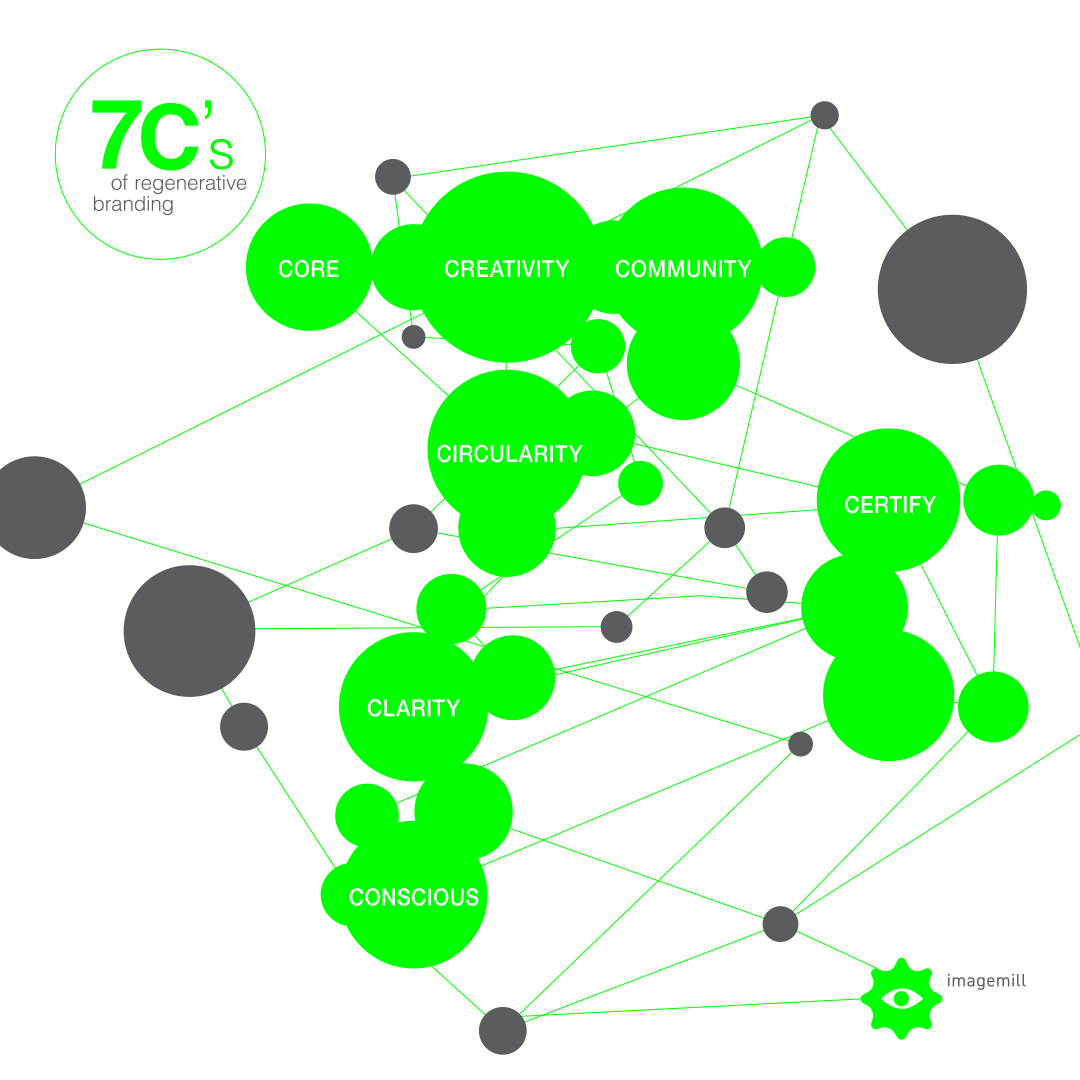
The regenerative 7Cs of brand and business network
The Business Challenge

reconnecting what business
has separated.

Modern organisations have become extraordinarily good at optimising individual parts of the business. Strategy, brand, sustainability, operations, people and communications each have their own priorities and measures of success.

But a business does not exist in pieces.

It can become more efficient while becoming less resilient. Reduce packaging while encouraging greater consumption. Communicate purpose while operating in ways that contradict it. Tell compelling sustainability stories while the underlying business remains unchanged.

The problem is often not a lack of ambition. It is fragmentation.

Regeneration begins by reconnecting what business has separated.

from sustainability
to regeneration.

Sustainability has taught business to ask an essential question: How can we reduce the harm we cause?

Regeneration goes further: How can our success contribute to the health of the systems that make our success possible?

It moves the ambition from efficiency towards resilience, from extraction towards reciprocity, and from isolated initiatives towards living systems.

Not simply doing less harm. Creating more good.

The Framework

three phases.
seven Cs.

KNOW → REDESIGN → ACTIVATE. Each phase builds on the last, while every dimension continues to influence the whole system.

KNOW

see before acting.

Before designing solutions, we need to understand the system: what the organisation does, what it depends upon, what consequences it creates and where the greatest opportunities for change exist.

C1

consciousness

see the whole system.

We cannot redesign what we cannot see. Consciousness expands the view beyond immediate operations to understand lifecycles, supply chains, dependencies and consequences.

Instead of asking only “How can we do this more efficiently?”, it asks: Should we be doing this at all, and if so, what could it become?

C2

clarity

make the invisible visible.

Clarity means being honest about where the organisation really stands, distinguishing meaningful change from activity that merely looks positive and acknowledging the trade-offs along the way.

Communication must follow reality. The story cannot outrun the change.

REDESIGN

change the structure.

Once we understand the system, we can begin changing the structures that shape it: purpose, governance, products, materials, business models and value flows.

C3

core

make purpose structural.

Purpose matters only when it influences difficult decisions. Core connects what an organisation says it stands for with how it actually operates, from leadership and governance to sourcing, incentives and ultimately how the business makes money.

A regenerative Core turns values from aspirations into decisions.

C4

circularity

keep value in motion.

Circularity begins long before recycling. It asks how products can last longer, materials can remain valuable, waste can be designed out and new models of ownership, access, repair and reuse can emerge.

The goal is not simply closed loops. It is healthy loops.

ACTIVATE

make it real.

Insight only matters when it changes behaviour. This is where regenerative thinking becomes something people can experience, participate in and measure.

C5

creativity

imagine what does not yet exist.

Regeneration requires more than optimising existing systems. It requires the imagination to reframe problems and create new possibilities.

We turn those possibilities into prototypes, experiments and real-world interventions. Through design, brand, film and storytelling, we make change visible, desirable and culturally meaningful.

C6

community

change happens through relationships.

No organisation regenerates alone. Employees, suppliers, customers, partners and communities all hold knowledge the organisation cannot possess by itself.

Community moves us from communication towards participation, and from transactions towards relationships.

A regenerative business does not simply extract value from the systems around it. It participates in their health.

C7

certify

make progress accountable.

Good intentions need evidence. Measurement, transparent reporting and independent frameworks such as B Corp and 1% for the Planet can turn voluntary ambition into structural accountability.

But certification is not the destination.

Measure. Learn. Adapt. Begin again.

Seven Dimensions · One Living System

not a checklist.
a living system.

The 7Cs are not a checklist. Each changes how we understand the others.

Consciousness changes what we see. Clarity changes what we prioritise. Creativity creates new knowledge. Community brings perspectives from outside the organisation. Accountability reveals where structures still need to change.

The aim is not to perfect seven individual scores. It is to move the whole system forward.

KNOW → REDESIGN → ACTIVATE → LEARN → ADAPT

Through The MILL

transformation has always been
embedded in our name.

A mill transforms what enters it into something of greater value, but it cannot work independently. It depends upon energy, land, water, knowledge, people and community.

Businesses are mills too. They transform materials, ideas, talent and capital into products, services, experiences and economic value.

What comes out of the mill? What value was created? What was depleted? Who benefited? What was left behind? And what flowed back into the systems that made it possible?

The 7Cs helps us understand that transformation and redesign it to create more than it takes.

How imageMILL Works

the framework is a mirror
before it is a map.

We don’t begin with the answer. We begin by understanding what is really there.

01

Diagnose

see where you are.

We use the seven dimensions to reveal gaps between ambition and reality, uncover blind spots and identify where change could have the greatest effect.

Not a sustainability score. A clearer picture of where to begin.

02

Develop

design what could be.

We turn insight into opportunity, developing the strongest ideas into practical interventions, whether that means a new proposition, product, service, circular system, brand, experience or programme.

The aim is not another strategy document. It is something capable of becoming real.

03

Document

make change visible.

This is where imageMILL brings strategy and creativity back together. Through brand, design, film, photography, editorial and experience, we give transformation a form people can understand and participate in.

We don’t create a sustainability story around an unchanged business. We help create change, then tell the story that change deserves.

Begin

start with
the system.

Every organisation is already transforming resources into value. The opportunity is to rethink how that transformation happens, reconnect what has become fragmented and create more value than we take away.

See the whole. Redesign what matters. Make change real. Learn. Begin again.

That is the regenerative 7Cs.
That is what we mean by going through the mill.